Blog
Our kayaking adventures and relections on traditional Greenland techniques for modern kayaks.
-
Because it's Cool
Many of the advanced Greenland rolls aren't useful in themselves. Instead they are rolls that require you to focus on, and master, core technique.
You’d have to come up with a fairly outlandish scenario that would require you to roll your kayak with a brick in your hand (maybe you’re clutching a particularly delicious and heavy chocolate bar?), or your arms in a straight jacket position (someone tied you up? Maybe you should work on being less annoying?). Really these rolls are about handicapping yourself, so that your core technique has to be excellent. Dirk discussed the value of these rolls over at how we roll (check it out here https://howwerollkayaking.co.uk/is-there-such-a-thing-as-a-bombproof-roll/).
You could think about these rolls as a way of showing off, although we hope you won’t. We hope you’ll see these rolls being practiced by thoughtful people who have worked hard to master a skill. Those people are normally pretty humble about it because they know these difficult rolls come and go and that expectation and egotism eventually get in the way. Of course if you do see someone being annoying…
Speaking of self-effacing and modest, here’s Suzanne dialing in a front deck brick (okay - it’s a rock) roll. Suzanne’s worked diligently and quietly on her front deck rolls. She had them completely dialed, but then they stopped working and it took months to get them back. Interestingly, James Manke says the brick roll is easier than a closed fist roll. Suzanne agreed - if you get the technique right the brick seems to act as a counterweight that reinforces the downward momentum you generate with your upper body in all of the front deck hand rolls.
-
The Front to Front Handroll
For many of us, the front to front handroll requires years of commitment. Read on at your peril!
Forward finishing hand rolls are one of those skills that sit right at the intersection of technique and feel. They demand flexibility, coordination, and finesse.
It’s all about timing: your lower body drives while your upper body stays relaxed and responsive. When everything lines up, it feels effortless. The kayak rolls up beneath you, your body follows naturally, and for a brief moment it feels almost weightless.
That’s the magic. That’s what makes all the failed attempts worth it.
More than anything, these rolls take you on a journey. You’ll fail. A lot. And in that process, you’ll learn not just about movement, but about patience, frustration, and persistence.
The Ingredients
Before chasing the perfect roll, make sure you’ve got the foundations:
- Forward flexibility: you want to be able to lean right onto the kayak. Ideally, you can almost touch it with your nose.
- Load and drive: a concept popularised by James Manke. Load the kayak first, then drive it with your legs. Both legs matter.
- Connection to the boat: a tight tuck is everything. Think “knee in your face” pressure.
The closer you start to the surface, the better. A strong forward tuck reduces effort dramatically and sets you up for success.
The Movement
The roll begins with connection and intention:
- Start tucked forward, close to the kayak.
- Reach out along the surface, rotating from your hips.
- The initial movement is outward, creating resistance.
- Then comes the drive: your legs and hips turn the kayak underneath you.
There’s a moment, hard to describe but unmistakable, when it clicks. The kayak suddenly feels powerful, almost like it’s rolling itself. It lifts you out of the water rather than you pulling yourself up.
That moment comes from the right combination:
- Strong lower-body drive.
- Relaxed shoulders and head.
- A controlled, outward-and-downward reach.
Where to Start
Start simple and controlled:
- Practice your forward tuck until it feels natural and effortless.
- Work on loading the kayak without trying to roll.
- Use the surface, staying as high as possible in the water.
- Break the movement into parts before linking it together.
Flat water is your friend early on. Remove variables so you can focus on feel.
Will It Take Long?
Honestly, it depends.
Some paddlers click with it quickly. For others, it’s a longer process of trial and error. The forward finishing hand roll is subtle. It rewards sensitivity more than strength.
Expect inconsistency at first. One good roll doesn’t mean you’ve “got it”, but it does mean you’re close.
Milestones
Look out for these signs of progress:
- You can comfortably hold a tight forward tuck.
- You feel the kayak “load” before you try to roll.
- Your rolls start to feel lighter, less forced.
- You begin to notice that moment where the kayak drives you up.
The biggest milestone is when it starts to feel repeatable, not lucky.
Why Even Bother?
Because it changes how you paddle.
Learning a forward finishing hand roll deepens your understanding of body and kayak connection. It teaches you to trust your lower body, stay relaxed under pressure, and work with the water instead of fighting it.
Beyond the technique, there’s something else: it’s a skill that humbles you, challenges you, and rewards you in equal measure.
When you finally nail it, clean, smooth, effortless, it’s one of the most satisfying feelings you can have in a kayak.
-
How I Roll
Matt's journey from 'normal' kayaker to Greenland rolling obsessive
My kayaking history is pretty much isolated to the scouts quite a few years ago, but i did proudly achieve a BCU 2 star back then and attended a pool rolling session where I was left with a very unreliable sweep roll.
I joined this group of rubber wearing (actually Reed aquatherm - check it out here: https://www.chillcheater.com/) rolling nerds a few years ago. I’d met up with Chris and Suzanne for a paddle and was quite tickled by the strange “sticks” they were using. But then I tried one. A little strange to paddle with, quivering until my stroke was corrected. Once they explained the standard greenland roll I was astonished to find I could roll… easily… time and time again… I was hooked.
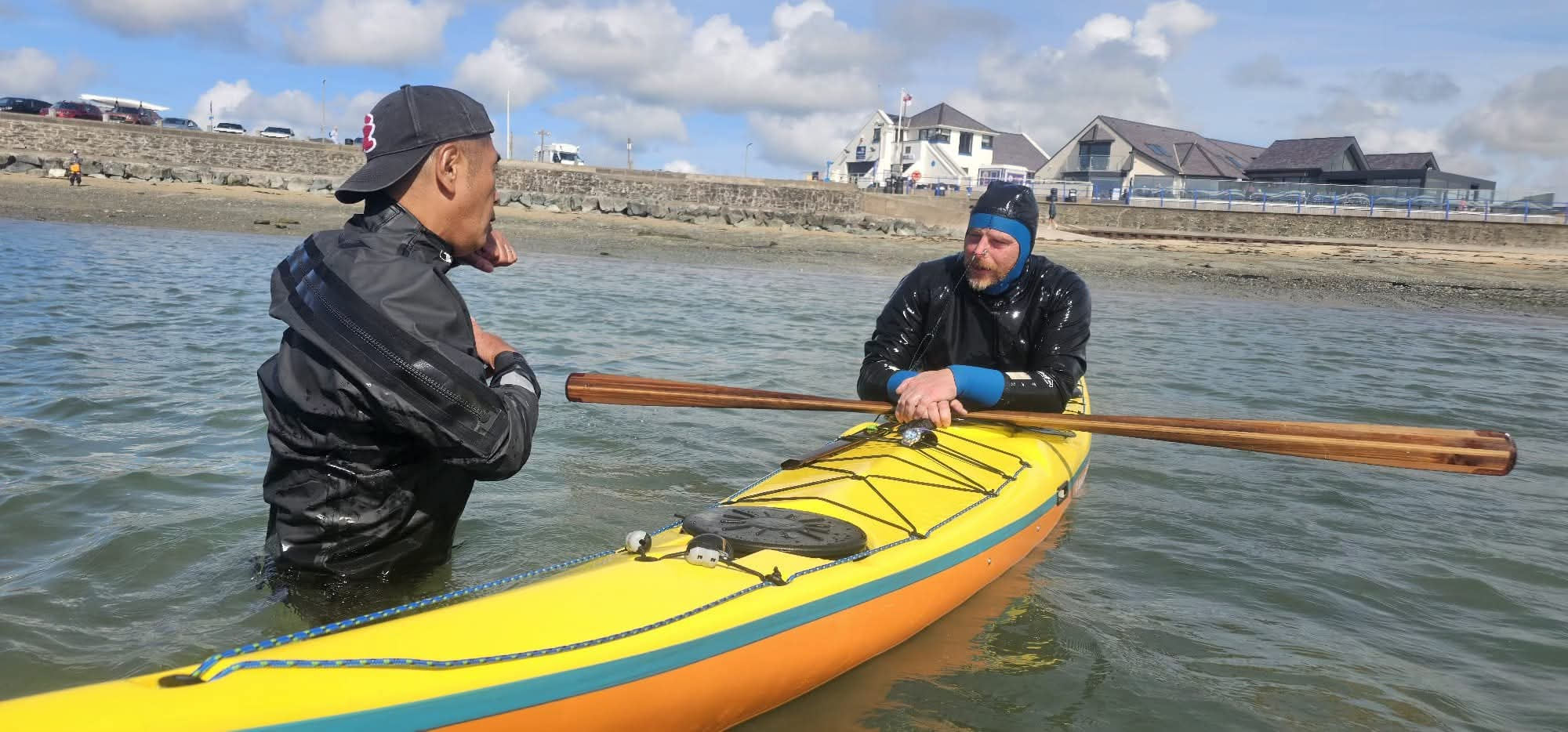
Storm rolls with the master! 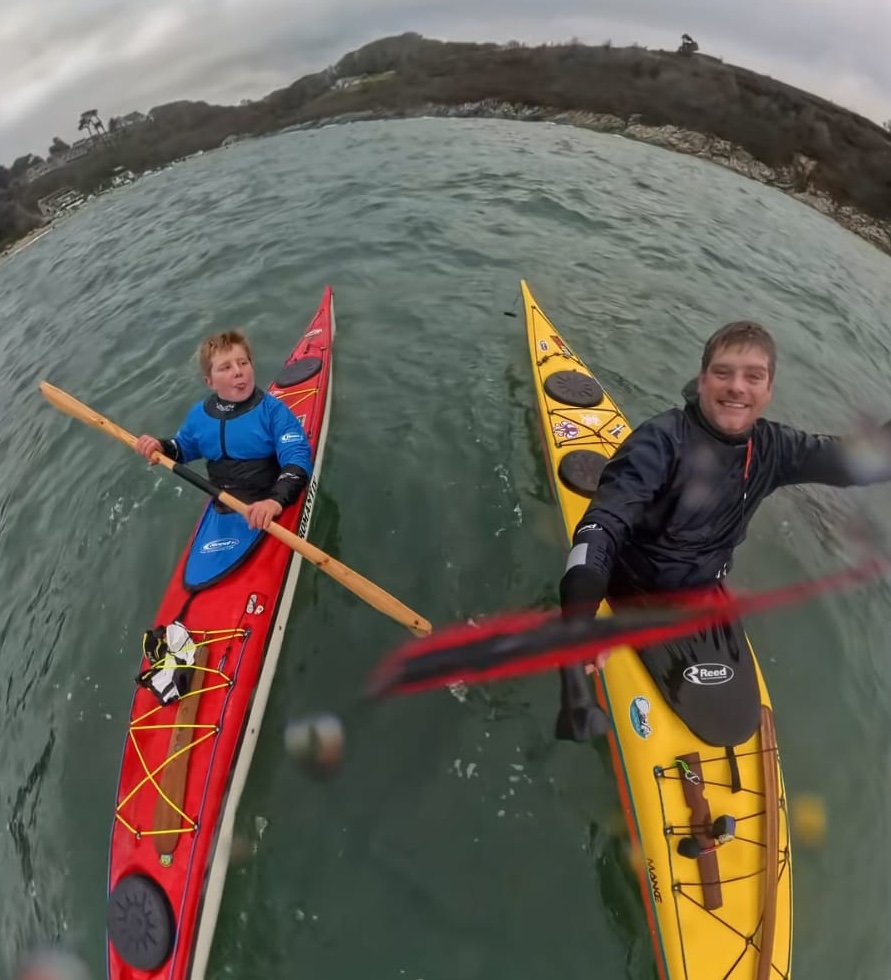
never too young to be one of the team. I should say I am certainly not as flexible, or as lightweight, as the rest of the brood. This means I can bring a different perspective to the art of greenland rolling. As with the others though I am devoted to learning the nuances of each roll, not perhaps for perfect form, but for a perfect success rate. There is a place for power in these rolls but knowing where to generate that power (hips and lower body - not the paddle!) and making it happen takes a lot of practice.
When you get as obsessed with rolling as we are the “bomb proof roll” argument does become amusing. You wouldn’t believe the freedom that knowing you’ll always bob right back up can provide in rougher waters. Its opened the door to learning other skills like surfing and more recently even a little whitewater.
A group of kayakers who like to drift a few meters from shore, roll upside down and back again until muscles cramp, eyes become bloodshot, and a hot cup of tea beckons. That’s how we roll, that’s the ducklings, peep peep.
-
Welcome to The Ducklings Blog
A quick hello and what to expect from our kayaking and Greenland rolling blog.
We are The Ducklings: a small group of friends and sea kayakers who love Greenland rolling. We think hard about how traditional kayaking skills translate into modern sea kayaks, with modern gear, and yes - even with modern euroblade paddles. You’ll rarely see us in traditional Greenland style boats, but you will see us obsessively practicing rolling and taking these traditional-inspired skills into the full range of coastal environments. This blog is where we’ll share what we get upto, and hopefully give you a sense of the fun you can have when you get your kayak upside down.
If you’re curious to learn Greenland style rolling or fancy some coaching, head over to How We Roll (https://howwerollkayaking.co.uk/)
-
The Ducklings Go Whitewater Kayaking
A day on whitewater with The Ducklings - did we cope without our Greenland paddles?
A day on the Dart loop
It’s a strange first blog post for a group of self-confessed Greenland-rolling inspired sea kayakers, but there you go - we’ve been white water kayaking. Our incredibly talented friends, N and M, coached and looked after us for the day so we got to throw ourselves in knowing we’d get plucked out if it all went wrong. We were all curious how we’d get on with euroblades and little boats. Here’s some of the action!
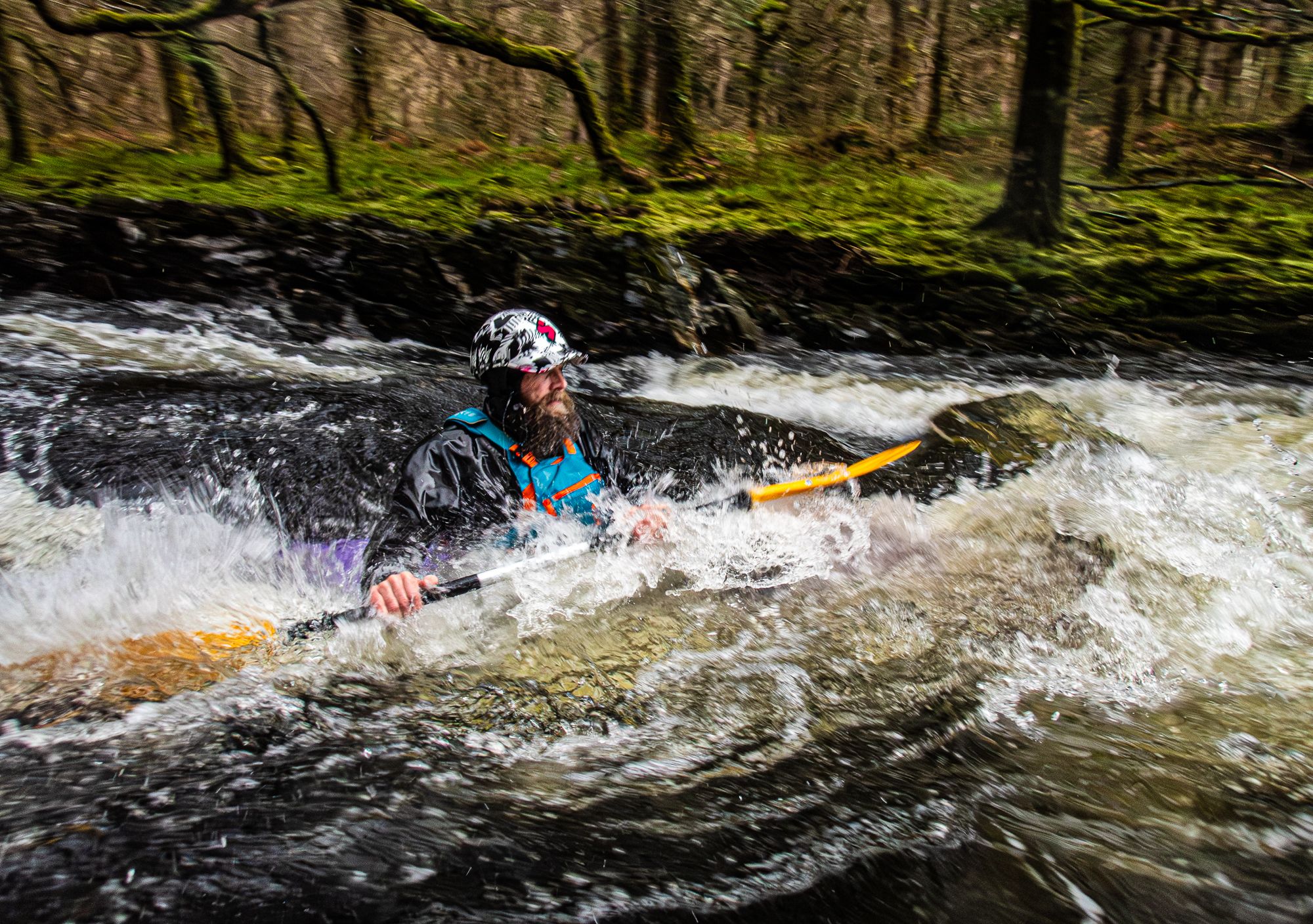
wait... on the water or in the water? 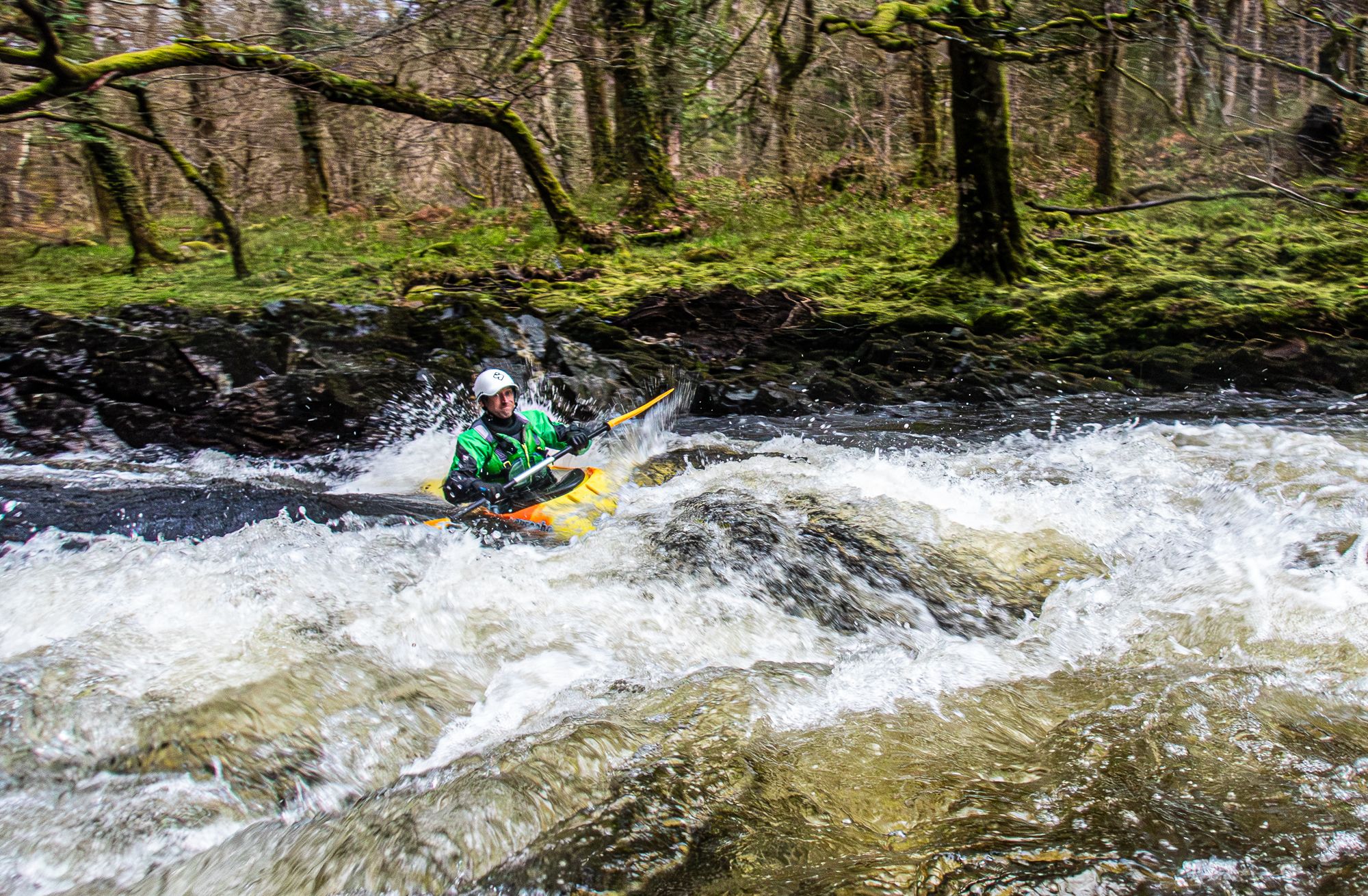
Why is this boat so short? 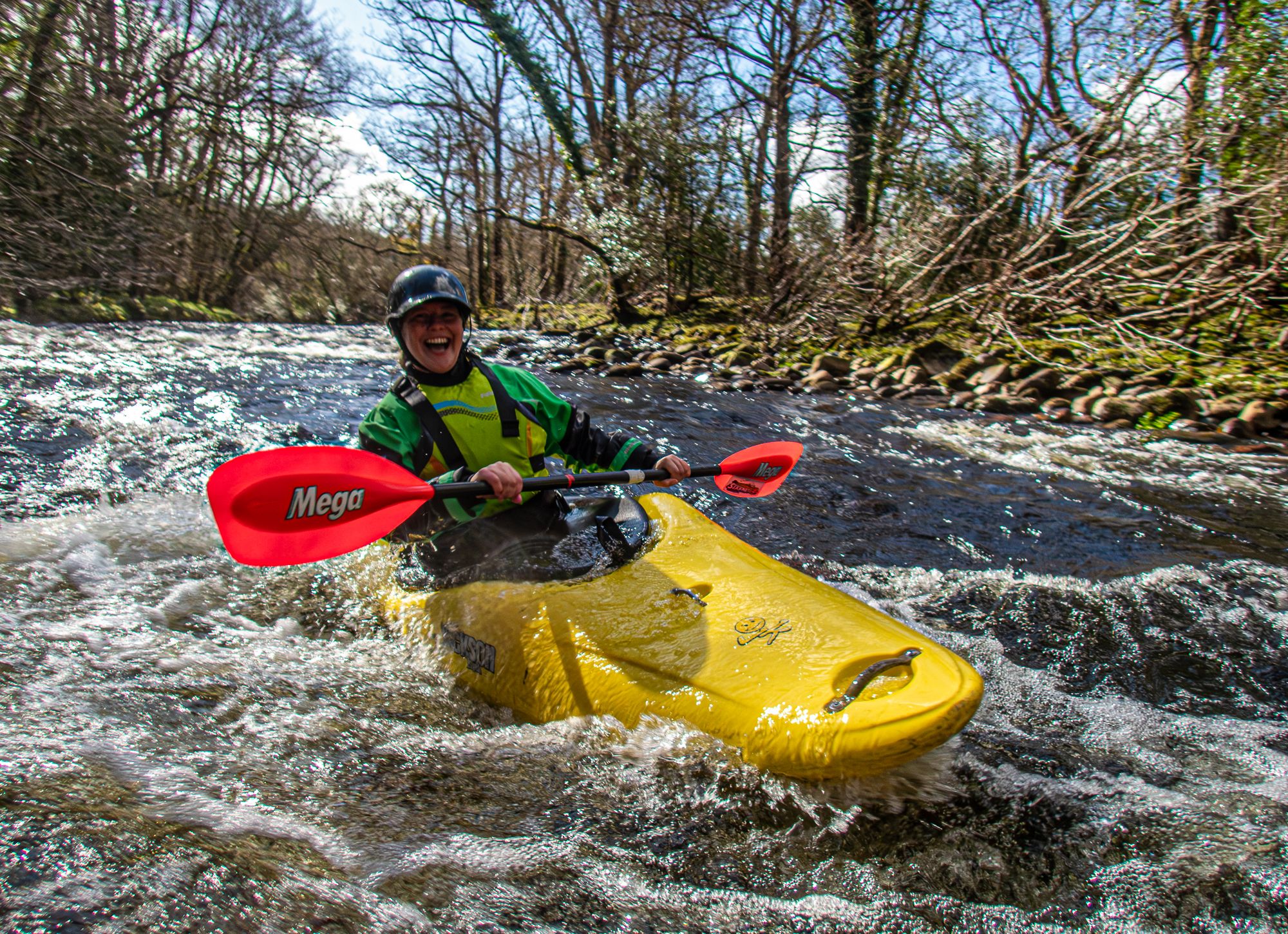
loving life and looking like a pro. 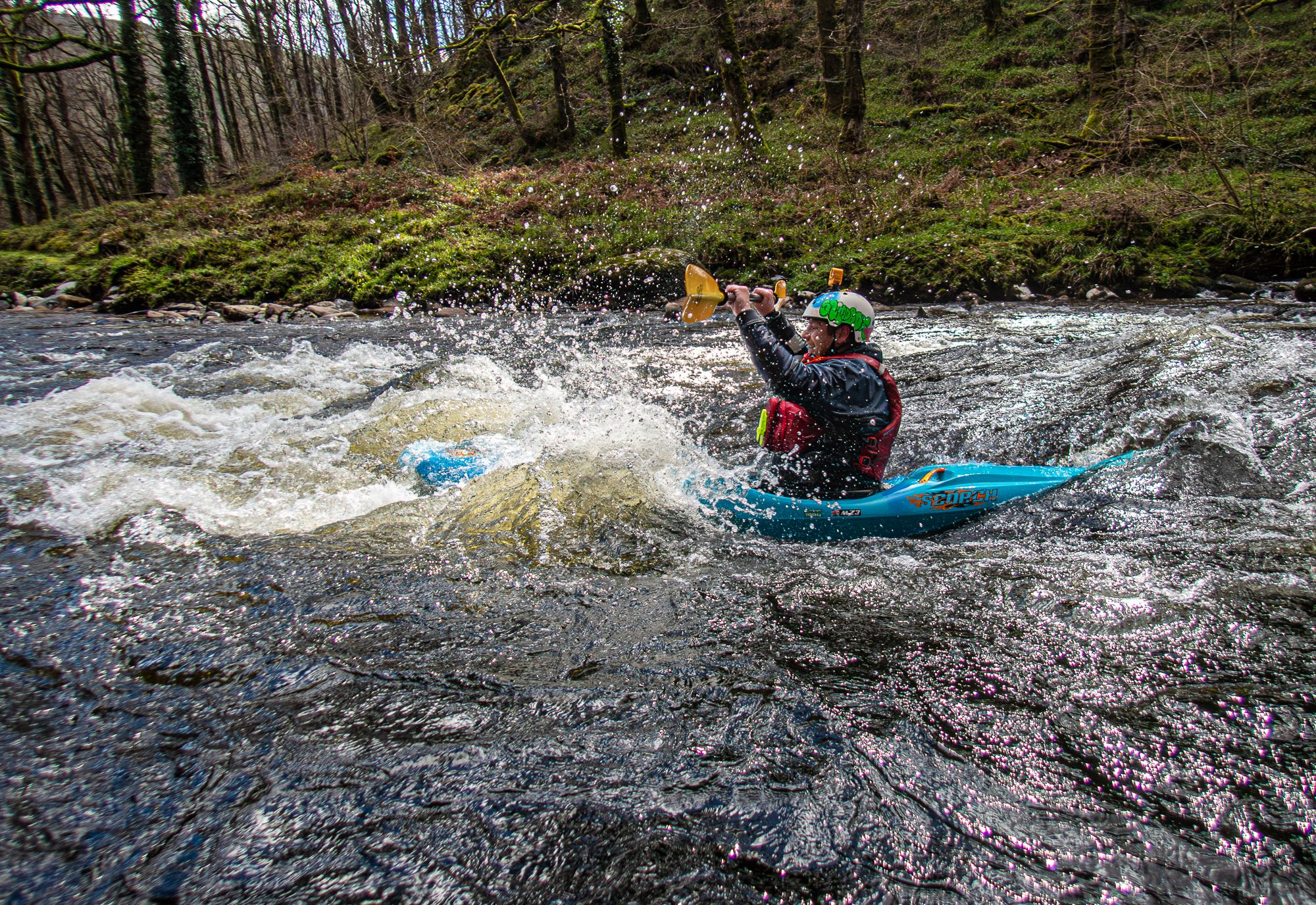
Paddles up - weeeeeeeeee!! What We Learned
Well - we learned that white water is a heap of fun! Despite being confident seakayakers and rollers we were all a little nervous about how the skills would translate. We all adapted to the euroblades, but it was really noticeable that the old school blades with 60-degree feathers were a pig to roll with (thank goodness those extreme feathers are a thing of the past). We’ve all done thousands of rolls and now happily roll in surf and pretty big conditions in the sea without any real concern. Still rolling funny little boats, with unfamiliar paddles in a very different environment felt challenging. There were one or two rolls that failed and had to be reset (two or three times on occassion…), but no swims. Makes you realise that 10,000 hours to master a skill isn’t an exageration!
The fundamental skills, like edging, were pretty familar, though reading white water felt quite different. All of us clattered into submered rocks pretty regularly. Whilst the classic seakayakers urge to lean on anything that looks like a wave resulted in some hilarity, we all got the hang of traversing features and breaking in and out of eddies pretty quickly. Fundamentally though we learned that an expert paddler playing in white water is a beautiful thing to behold… despite the funny little boat and the strange paddle.